North Hill Church
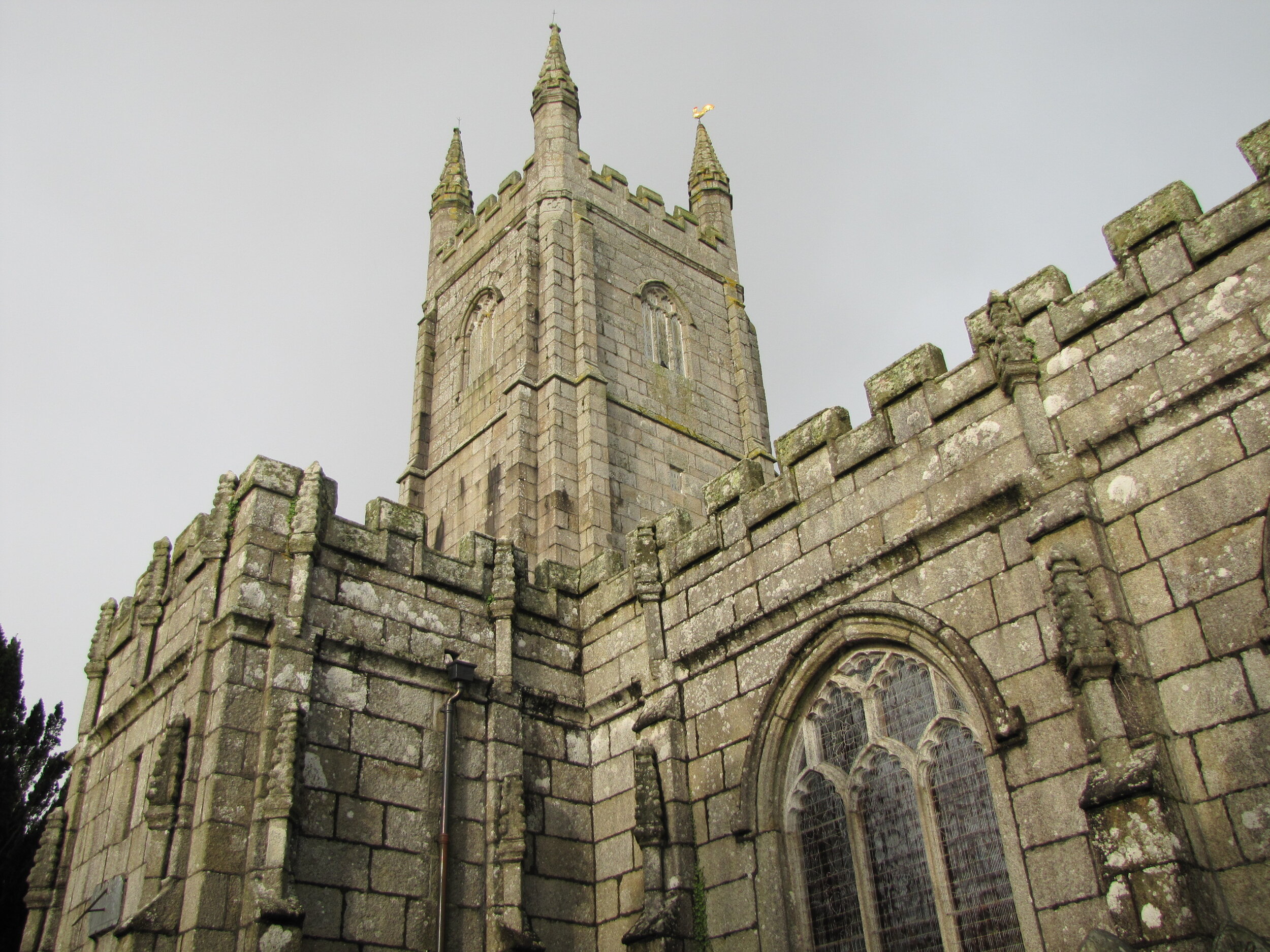
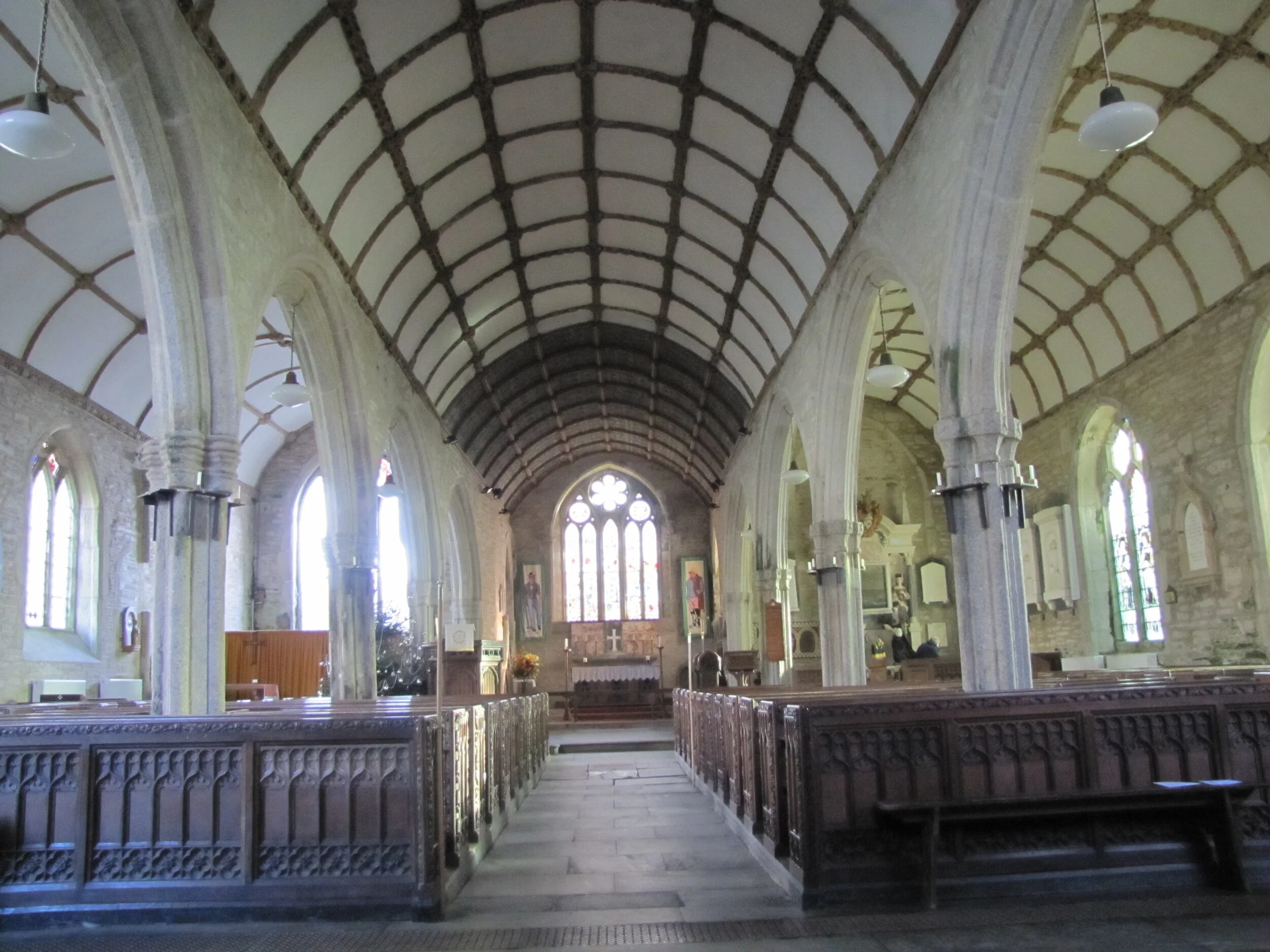
‘North Hill Church – An Architectural Gem’
“One of Cornwall’s most enjoyable churches – ambitiously decorated without and rich in interest within.” Nicholas Pevsner
On a wet Cornish day in early August 2017, 70 people attended an excellent talk on the history of St Torney’s given by Dr Joanna Mattingly, an authority on Cornish Churches from Truro. Much was learnt which confirmed the historical importance of the church.
North Hill Church is an impressive Grade 1 listed historical gem with a mid-15th century tower that is the tallest in East Cornwall. At least 600 years old, with a Font of Norman origin and parts of the sanctuary and chancel 14th century. The Rector from 1335 – 1349 was the Canon of Exeter who probably paid for the Chancel. The rest is 15th and 16th century. We learnt that the church was first built as a Catholic church but became Anglican in the period 1548 to 1570.
Originally a Rood screen and loft separated the aisles and nave from the chancel and side chapels and there is evidence of an original staircase. The Rood loft would have been adorned with decoration for significant religious festivals. Dr Mattingly suggested it was likely to have been removed c 1800 as more space was created for preaching-based worship. We were shown slides to compare the design of the ornate south aisle of the church to St Neot and Liskeard both built c1480 – 1510s but she believed it to be closer to St Mary’s Launceston built from 1511-43 whose exterior decoration is more like St Mary’s Truro of 1504 – 8. The question of who build the south aisle was illustrated by a slide with local surnames in 1522 and we were able to recognise Kneebone, Bareball, Bowhay, Crabb, Carew and Adecroft amongst others.
We were intrigued to discover that adjoining the roof of the North Aisle, (almost certainly the earlier of the two), were various motifs and shields of the Courtenay family, the Earls of Devon who owned the local important property Landreyne. Of significant historical interest, William Courtenay married Katherine Plantagenet, daughter of Edward IV, she was born c1480, married 1495, widowed 1511 and died 1527. She was the sister of Elisabeth who married Henry VII and became Queen of England and her brothers were the princes in the Tower. William and Katherine’s money went into the North Aisle and therefore makes this church of national significance. Katherine heads the list of North Hill landowners in 1522 with £2 in rents from Landreyne.
Why not visit the church and see if you can spot in the roof detail of the North aisle the Courtenay arms of the three torteaux (roundels), a chevron to the Trelawnys, four conjoined lozenges which may refer to the Cheyneys, the Bishop of Exeter’s crossed key and sword, and also heraldic badges: the ragged staff of the Earl of Warwick,(known as the Kingmaker, supporting Edward IV to the crown, but probably referring to Katherine’s grandmother who was a Neville), the fetlock or padlock of the Plantagenets (indicating marriage) and the bundle of faggots which was the Courtenay’s livery badge.
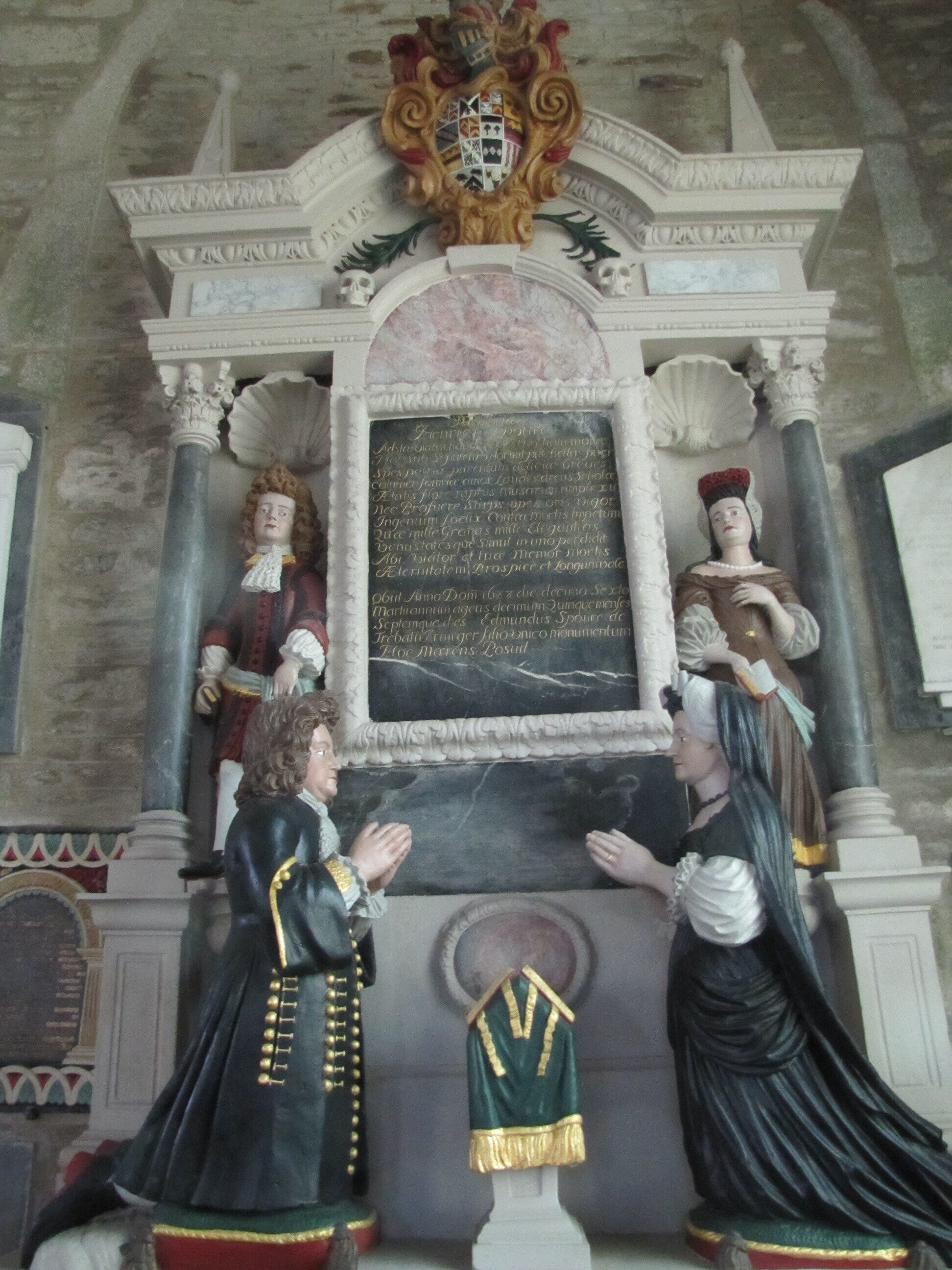
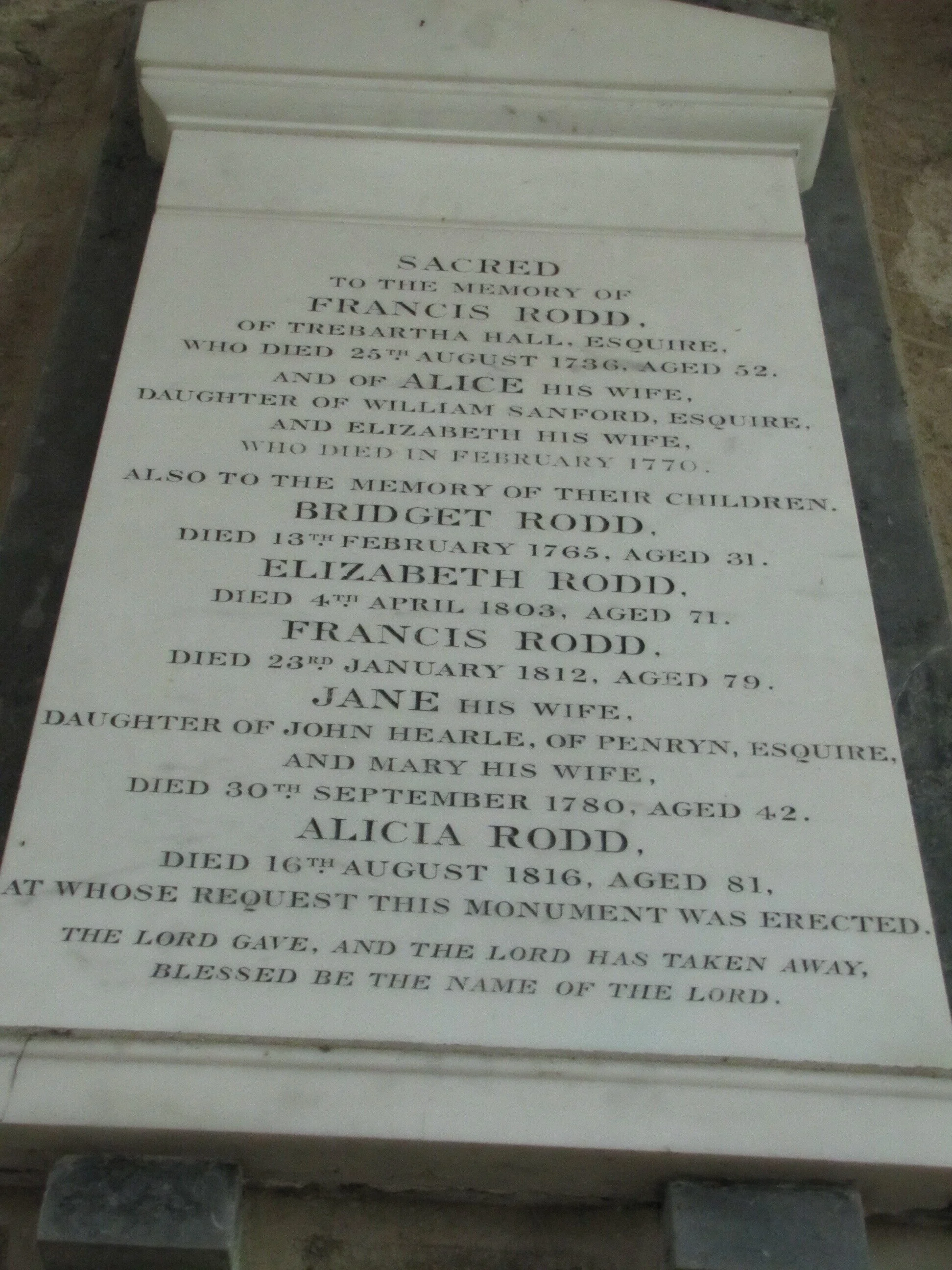
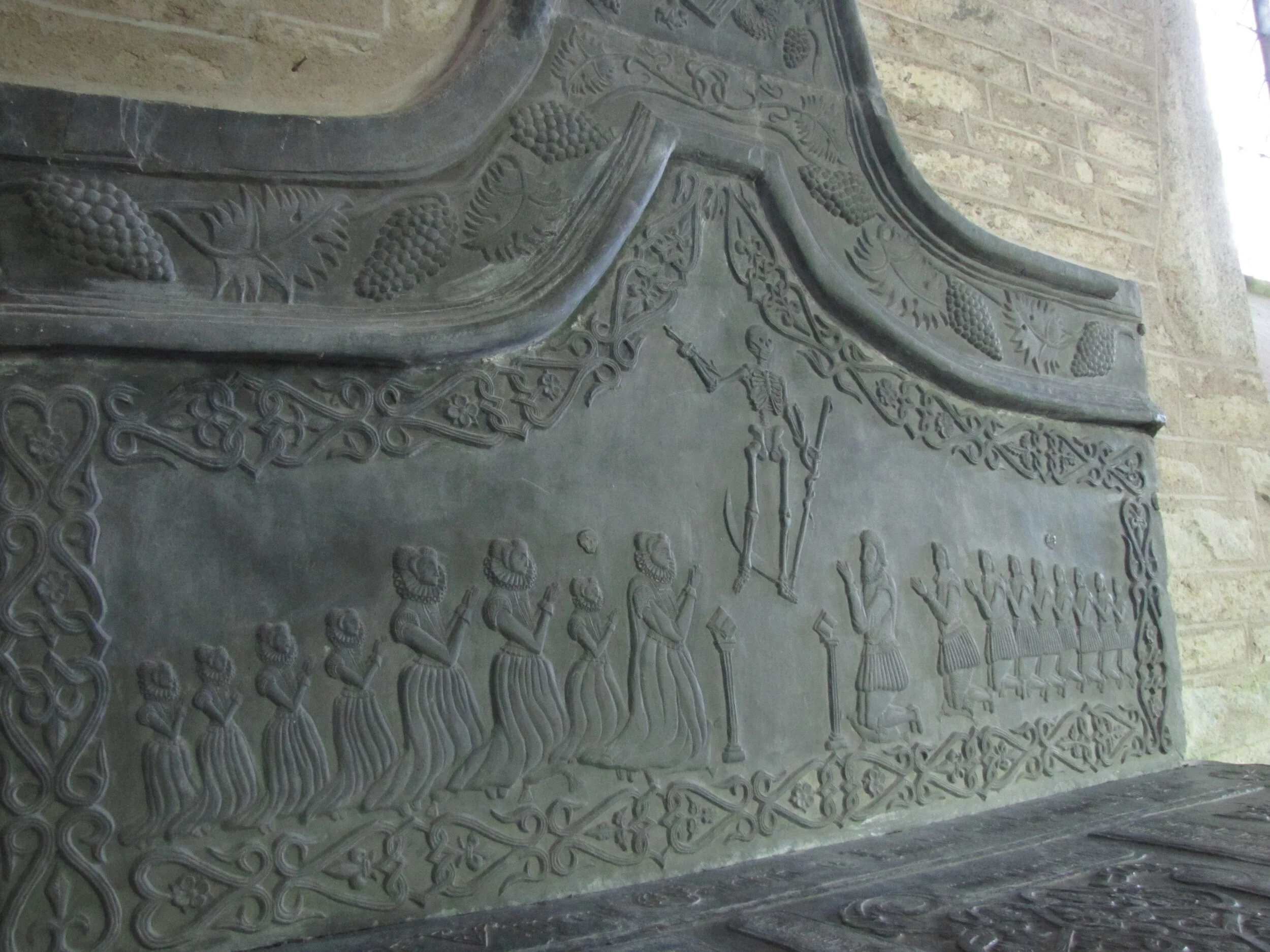
The church contains a notable collection of 17th century monuments namely that of Thomas Vincent Esq of Battens who died in James 1’s reign and the stunning Spoure Memorial of the 1680’s, as the reign of Charles II came to an end. 1724 is the date on the Trebartha Pew. The Spoure family owned the local Trebartha Estate for several centuries before it passed on to the Rodds in the 18th century and then was purchased by the Latham family in 1940. Of great interest too, is the battlemented granite structure adjacent to the north-east corner of the church, created in 1805, a burial vault for the Rodd family. In 1791 during the Gothick revival period eight new windows with Y tracery were put in to the north aisle and west end to create a more modern feeling of light. Other windows are Victorian.
St Torney’s is a medium to large church which reflects the prosperity of an earlier age. The industrial activities of Tin mining and granite quarrying were active in these parts and doubtless the granite from the local quarries was used to build the church. North Hill lies at the centre of an extensive rural parish, close by in the valley, runs the beautiful river Lynher and on the far side is rugged Bodmin moor with the Tors of Kilmar (third tallest in Cornwall), Bearah, Sharp Tor, Trewortha & Hawks Tor.
Of interest the writer Daphne du Maurier knew the parish well and used to visit the Rodds at Trebartha. North Hill was featured in her famous novel Jamaica Inn and in the old days the Estate spread that far across the moor. The artist John Piper and poet John Betjeman visited North Hill when researching their Shell Guide of Cornwall. John Piper painted this part of the moor in the 1960’s and although a prolific painter of churches, as yet a study of North Hill has not yet come to light.
Jo’s knowledge and enthusiasm was incredibly infectious. Standing in front of the audience taking questions, I suddenly remembered the last time I stood at the front of a full St Torney’s church, it was for our wedding – the service was officiated by the wonderful Reverend Willie Cox – who would have been delighted with our evening… St Torney’s is a space for peace and spirituality, a space for the celebration of life and a memorial for those who have gone before us. It is imperative now that the Parish seek a solution as to how this historical and spiritual space can be secured for the future.
I am delighted to report that the event raised £365 on the night, (entry fee and donations), and this has been increased through further donations to a total of £1100.00.
Please join us in saving this beautiful Cornish Church.
Sarah Latham
August 2017